Sent from a MacBook not an iPhone.(Replaced some details with Xs to protect his privacy in the unlikely case that he has any.)
--------------------------------------
Guy Kawasaki
Nononina, Inc.
360 xxxx Street, Suite 100
Palo Alto, CA 94301
http://alltop.com/
xxxx@xxxx.com (best way to get in touch)
650-838-xxxx office (you'll never get me here)
650-387-xxxx cell (Spinvox will convert voicemail to email so I don’t have
to listen to people ramble)
650-853-xxxx fax (what's a fax?)
http://twitter.com/guykawasaki (if you have no life)
http://blog.guykawasaki.com/ (if you want to see why I have no life)
http://holykaw.com/ (if you want to see how I have fun in my life)
Tuesday, March 24, 2009
Guy Kawasaki's fun email signature
I just got an email from the famous (and with respect to his Twitter activity, some would say infamous) Guy Kawasaki. His email signature is really hilarious, which is why I want to share it with you:


Wednesday, March 04, 2009
Zendesk - Help Desk 2.0
Following my long-due update on Pageflakes here’s an update on what I’ve been doing since I’ve left Pageflakes. After spending some time with my family at a beautiful place in the sun, I started to look for new opportunities (to be perfectly honest I of course couldn’t resist researching new ideas while we were still on Barbados. Caribbean beaches and a DSL connection, what more can you ask for?). For various reasons I wasn’t yet ready to start my own thing again so I started to look for existing early-stage companies where I could come in as an angel investor and advisor. To some degree I “went to the dark side” (of funding) as it’s sometimes referred to but I’m really trying to be worthy of the term “angel” investor by really trying to help my companies in many different ways.
The first company I’ve made an investment in is Copenhagen-based Zendesk, founded in 2007 by a rock-star team around CEO Mikkel Asger Svane. This is no new news since it was announced last June and covered by Om Malik and others but I still wanted to blog about it here. If you don’t know Zendesk yet, the company offers a beautifully simple yet powerful on-demand help desk solution. You can buy and operate the system online and never have to worry about downtime, upgrades, security, backup or training. Setup is extremely easy and you can be up and running in hours.
Any business that serves more than a handful of customers needs a help desk solution in order to handle customer questions and support requests. Existing solutions are expensive, painfully difficult to set up and hard to use. Zendesk combines a professional-grade feature set with a beautifully simple Ajax-based user interface that resembles everyday web applications. If you want to have more productive and happier customer agents and want to save money along the way, check it out!
The first company I’ve made an investment in is Copenhagen-based Zendesk, founded in 2007 by a rock-star team around CEO Mikkel Asger Svane. This is no new news since it was announced last June and covered by Om Malik and others but I still wanted to blog about it here. If you don’t know Zendesk yet, the company offers a beautifully simple yet powerful on-demand help desk solution. You can buy and operate the system online and never have to worry about downtime, upgrades, security, backup or training. Setup is extremely easy and you can be up and running in hours.
Any business that serves more than a handful of customers needs a help desk solution in order to handle customer questions and support requests. Existing solutions are expensive, painfully difficult to set up and hard to use. Zendesk combines a professional-grade feature set with a beautifully simple Ajax-based user interface that resembles everyday web applications. If you want to have more productive and happier customer agents and want to save money along the way, check it out!
Monday, February 02, 2009
An update on Pageflakes
It’s again been a very long time that I wrote something here, and an even longer time that I wrote about Pageflakes or about what I’ve been doing since I left the company about a year ago. I did become a reasonably active Twitterer in the meantime though – the 140 character format is probably better suited for my literal talent! Anyway, I thought it’s time for a quick update.
One of my last blog posts about Pageflakes was about my attempt to convince Mike Arrington and Pete Cashmore that Pageflakes was the Next Big Thing, my goal for 2006 as I put it (half joke, half serious). While both of them were very skeptical about the whole thing in the beginning, Pete wrote a very favorable posting about us in October 2006. Convincing Mike was more difficult but he got more and more positive over time as well, covering our 2.0 relaunch as well as release “Flurry” and “Blizzard” (thanks, Dan, for introducing a nicer release terminology!).
With each of our major releases we made it easier to create a personalized page and to get all the best the Web has to offer on one page. I think we also raised the bar for the whole category of personalized homepages with each release. This is the result of a huge team effort, which the whole Pageflakes team can be very proud of, especially if you consider that our most important competitors were iGoogle, MyYahoo and (vastly better-funded) Netvibes.
Nevertheless, although we did get more and more users who loved Pageflakes and used it as their very own entry point to the Internet and did get considerable mindshare, especially in the Web 2.0 community, we (and the whole market, for that matter) never grew as fast as we hoped. One of the reasons was that as much as we tried to make the product as easy-to-use as possible, the barrier to adoption was still a tad too high for many users. Creating your personal page just never got as easy as watching a video on YouTube. YouTube offers users instant gratification. Your own Pageflakes page may provide you more value in the long term, but getting there also takes a little longer. Likewise, although we had considerable success in redefining the product category of personalized startpages into a more "social" one, Pageflakes never got (and never could get) as social as, say, MySpace. Although hundreds of thousands of users created an extremely diverse variety of Pagecasts and shared them with their friends or with the general public, the majority of our users just enjoyed their pages privately. That didn’t come as a surprise, of course – Pageflakes falls under the 90/9/1 rule whereas you have to connect with friends on social networking sites.
We did hope that the product would get more viral and social though, and in order to become the next Yahoo! (our slightly ambitious stated goal when we started at the end of 2005) we would have needed higher organic growth rates (ironically, if Yahoo! continues to fare as badly as it did in the last months, we can still become the next Yahoo! ;-) ). So when 2007 turned to a close, we had an award-winning product with a loyal user base that was growing but wasn’t big enough and wasn’t growing fast enough in order to monetize the service effectively in the near term. Around the same time, the appetite of VCs to fund companies like ours started to decrease, resulting in worsened terms for startups. In that situation, we thought our best choice was to partner with a large player that has a huge amount of users.
Many know the rest of the story: In April 2008 we got acquired by LiveUniverse, the new media company of MySpace founder Brad Greenspan. Unfortunately our initial enthusiasm about the deal started to fade away quickly since Pageflakes quickly started to suck. First just a little (no more new features), then more and more (bad customer service, sudden introduction of obtrusive ads on users’ pages without any communication, downtimes), and the last dark climax was an outage of about four days without any communication from LiveUniverse to its users, causing a ton of understandable complaints of Pageflakes users on Twitter. It took me a long time to admit this publicly and I really don’t like to badmouth the company that bought Pageflakes, but it’s time for me to say sorry to all Pageflakes users. If a super loyal Pageflakes user like Phil Bradley has to write a blog post like this, you know that you have crossed a line. Phil has been using Pageflakes for years and wouldn’t leave the service light-mindedly. But enough is enough – his post says it all.
As of right now, Pageflakes is up again but because of the almost complete lack of communication on behalf of LiveUniverse I don’t know how long it’ll stay up and running. The company told CNet's Webware on Friday that the downtime was due to a data center migration but I don’t know if it’s true. Other reports indicate that they are in trouble. I’ll continue to use Pageflakes for now and will keep my fingers crossed that LiveUniverse will change course. If you do have to shut down the service, dear Brad Greenspan, please give the users at least two weeks’ notice to save their data and move to another service. There are many legitimate reasons why a company can fail or why a service needs to be shut down. But you really have to make sure that users get a chance to save their valuable data. Failure to do this is not only puts Pageflakes users in trouble, it also undermines users' trust in the cloud in general. Thank you.
One of my last blog posts about Pageflakes was about my attempt to convince Mike Arrington and Pete Cashmore that Pageflakes was the Next Big Thing, my goal for 2006 as I put it (half joke, half serious). While both of them were very skeptical about the whole thing in the beginning, Pete wrote a very favorable posting about us in October 2006. Convincing Mike was more difficult but he got more and more positive over time as well, covering our 2.0 relaunch as well as release “Flurry” and “Blizzard” (thanks, Dan, for introducing a nicer release terminology!).
With each of our major releases we made it easier to create a personalized page and to get all the best the Web has to offer on one page. I think we also raised the bar for the whole category of personalized homepages with each release. This is the result of a huge team effort, which the whole Pageflakes team can be very proud of, especially if you consider that our most important competitors were iGoogle, MyYahoo and (vastly better-funded) Netvibes.
Nevertheless, although we did get more and more users who loved Pageflakes and used it as their very own entry point to the Internet and did get considerable mindshare, especially in the Web 2.0 community, we (and the whole market, for that matter) never grew as fast as we hoped. One of the reasons was that as much as we tried to make the product as easy-to-use as possible, the barrier to adoption was still a tad too high for many users. Creating your personal page just never got as easy as watching a video on YouTube. YouTube offers users instant gratification. Your own Pageflakes page may provide you more value in the long term, but getting there also takes a little longer. Likewise, although we had considerable success in redefining the product category of personalized startpages into a more "social" one, Pageflakes never got (and never could get) as social as, say, MySpace. Although hundreds of thousands of users created an extremely diverse variety of Pagecasts and shared them with their friends or with the general public, the majority of our users just enjoyed their pages privately. That didn’t come as a surprise, of course – Pageflakes falls under the 90/9/1 rule whereas you have to connect with friends on social networking sites.
We did hope that the product would get more viral and social though, and in order to become the next Yahoo! (our slightly ambitious stated goal when we started at the end of 2005) we would have needed higher organic growth rates (ironically, if Yahoo! continues to fare as badly as it did in the last months, we can still become the next Yahoo! ;-) ). So when 2007 turned to a close, we had an award-winning product with a loyal user base that was growing but wasn’t big enough and wasn’t growing fast enough in order to monetize the service effectively in the near term. Around the same time, the appetite of VCs to fund companies like ours started to decrease, resulting in worsened terms for startups. In that situation, we thought our best choice was to partner with a large player that has a huge amount of users.
Many know the rest of the story: In April 2008 we got acquired by LiveUniverse, the new media company of MySpace founder Brad Greenspan. Unfortunately our initial enthusiasm about the deal started to fade away quickly since Pageflakes quickly started to suck. First just a little (no more new features), then more and more (bad customer service, sudden introduction of obtrusive ads on users’ pages without any communication, downtimes), and the last dark climax was an outage of about four days without any communication from LiveUniverse to its users, causing a ton of understandable complaints of Pageflakes users on Twitter. It took me a long time to admit this publicly and I really don’t like to badmouth the company that bought Pageflakes, but it’s time for me to say sorry to all Pageflakes users. If a super loyal Pageflakes user like Phil Bradley has to write a blog post like this, you know that you have crossed a line. Phil has been using Pageflakes for years and wouldn’t leave the service light-mindedly. But enough is enough – his post says it all.
As of right now, Pageflakes is up again but because of the almost complete lack of communication on behalf of LiveUniverse I don’t know how long it’ll stay up and running. The company told CNet's Webware on Friday that the downtime was due to a data center migration but I don’t know if it’s true. Other reports indicate that they are in trouble. I’ll continue to use Pageflakes for now and will keep my fingers crossed that LiveUniverse will change course. If you do have to shut down the service, dear Brad Greenspan, please give the users at least two weeks’ notice to save their data and move to another service. There are many legitimate reasons why a company can fail or why a service needs to be shut down. But you really have to make sure that users get a chance to save their valuable data. Failure to do this is not only puts Pageflakes users in trouble, it also undermines users' trust in the cloud in general. Thank you.
Wednesday, May 07, 2008
The New Digital Divide
Shafqat over at Newscred, a digital newspaper which is currently in private alpha, wrote a good post titled "The New Digital Divide - Building Web Services for the Mainstream". His point is that the chasm between early adopters on the one hand and mainstream users on the other hand is getting larger:
Very true. While it's great to see all those new Web 2.0 ideas, innovations and technologies coming up every day, we (the Web 2.0 community) also have to avoid creating lots of products which no one else except ourselves is going to use any time soon.
If your startup's plan is to acquire millions of customers over the next few years (which is likely if you want to make money by selling ads), do a reality check and explain your idea to some "real" people among your friends and family.
Also read Josh Kopelman's great article about the same topic.
The mainstream don’t even use or understand RSS, but us techies have moved on to Twitter and FriendFeed.
Very true. While it's great to see all those new Web 2.0 ideas, innovations and technologies coming up every day, we (the Web 2.0 community) also have to avoid creating lots of products which no one else except ourselves is going to use any time soon.
If your startup's plan is to acquire millions of customers over the next few years (which is likely if you want to make money by selling ads), do a reality check and explain your idea to some "real" people among your friends and family.
Also read Josh Kopelman's great article about the same topic.
Tuesday, April 22, 2008
A nice way for your beta site to say "Feedback please"
Have a look at the screenshots below:

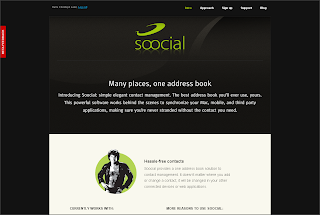
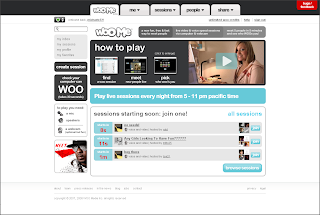
What do these otherwise completely unrelated Web 2.0 sites have in common? Instead of the good old "Send Feedback" link in the page footer, all three of them prominently feature a large, red, eye-catchy "beta feedback" badge.
If you click on the badge, a window that contains the feedback submission form pops up; usually instantly, without a full page reload, so you can type in your feedback right away. Often the background of the page is greyed out, producing a lightbox effect which puts the feedback form into full focus.
I think this is a smart advancement of the notorious Web 2.0 beta badge. If you’re featuring the "Send feedback" link so prominently, firstly and obviously more people will notice it and provide you with valuable comments, bug reports and suggestions. Secondly, you show your audience that you really care about what your users think. Consider using this emerging UI pattern - at least as long as you’re in public beta (which you might be forever).


What do these otherwise completely unrelated Web 2.0 sites have in common? Instead of the good old "Send Feedback" link in the page footer, all three of them prominently feature a large, red, eye-catchy "beta feedback" badge.
If you click on the badge, a window that contains the feedback submission form pops up; usually instantly, without a full page reload, so you can type in your feedback right away. Often the background of the page is greyed out, producing a lightbox effect which puts the feedback form into full focus.
I think this is a smart advancement of the notorious Web 2.0 beta badge. If you’re featuring the "Send feedback" link so prominently, firstly and obviously more people will notice it and provide you with valuable comments, bug reports and suggestions. Secondly, you show your audience that you really care about what your users think. Consider using this emerging UI pattern - at least as long as you’re in public beta (which you might be forever).
Sunday, February 03, 2008
Microhoo: I (almost, kinda, sort of) told you so ten years ago
When I was reading the news about the proposed Microsoft/Yahoo! deal, for some reason it recurred to me that I was speculating about Microsoft buying AOL in a Usenet forum back in 1997. Yahoo! isn't AOL and the idea was pretty far-fetched at that time, but interestingly enough Microsoft's rationale for buying Yahoo! at the beginning of 2008 looks similar to the rationale for buying AOL more than ten years ago.
Friday, December 08, 2006
Pagebull - your visual Internet search engine
A few days ago, Pagebull went from stealth mode into public beta. Pagebull is the latest brainchild of my good friend and long-term business partner Christopher Münchhoff. It's a new search engine that provides a radically new user interface: Instead of a text-based list of the sites that match your search query, it shows you a grid of large screenshots of those sites.
The idea behind Pagebull's approach is that when you go to a site, you'll often know after a second if the site has what your looking for or not - and an inappropriate amount of time is wasted going back and forth between Google and the "target" sites. Pagebull now lets you glance over nine or more screenshots at a time, saving you the effort of clicking from one target site to the next.
What's interesting is that Pagebull benefits from two important industry trends: More bandwidth and larger screens. Using Pageflakes on a 30" screen and a super-fast cable connection must be fun!
It would be interesting to conduct a study to find out how much time Pagebull saves an average Internet user who spends, say, an hour per week on Google. Then just extrapolate that to all American office workers, and the US economy can probably save a few billion worth of productivity per year. ;-)
Seriously: Pagebull will not drive Google out of business any time soon, but it's an extremely impressive, innovate approach to improve the search engine user experience on the Web.
Try it!
The idea behind Pagebull's approach is that when you go to a site, you'll often know after a second if the site has what your looking for or not - and an inappropriate amount of time is wasted going back and forth between Google and the "target" sites. Pagebull now lets you glance over nine or more screenshots at a time, saving you the effort of clicking from one target site to the next.
What's interesting is that Pagebull benefits from two important industry trends: More bandwidth and larger screens. Using Pageflakes on a 30" screen and a super-fast cable connection must be fun!
It would be interesting to conduct a study to find out how much time Pagebull saves an average Internet user who spends, say, an hour per week on Google. Then just extrapolate that to all American office workers, and the US economy can probably save a few billion worth of productivity per year. ;-)
Seriously: Pagebull will not drive Google out of business any time soon, but it's an extremely impressive, innovate approach to improve the search engine user experience on the Web.
Try it!
Friday, November 03, 2006
Pageflakes 2.0
About two weeks ago we launched a new version of Pageflakes and it's time to finally announce it here, too! If you go to the site, you will notice the big facelift that the site received. The fresh new look might be the most visible change, but it's by far not the only one. The long list of improvements and new features of the new version includes:
- Page Templates
Dozens of pre-created page templates for topics like work, family, sports, finance, entertainment, education and much more. Now it takes just a mouse click to add a whole page with the best modules for a certain topic area. - Feeds and Podcasts
A Feed Directory and a Podcast Directory with hundreds of news feeds and podcasts from all over the world and for almost every category. - Community Site
A new Pageflakes community environment at www.pageflakes.com/community which allows you to search, submit, rate and discuss flakes and do much more. - Share your page!
Setting up a shared page with other users is now easier than ever. - Public pages
A Public Pages Gallery of all the pages which Pageflakes users have published.
Thursday, November 02, 2006
Ugenie unlocks hidden savings
TechCrunch today profiled a new comparison shopping site called Ugenie. What makes Ugenie different from most (all?) other similar sites is that the service not only finds the best price on a single item but also the best total price on any bundle of books, CDs, DVDs or games that you happen to be interested in.
Ugenie finds the best bottom-line prices for you, taking into account shipping costs, taxes and discounts. What's more, the service also takes into account that sometimes it's cheaper to pay all items from one merchant but in other cases it's cheaper to spread an order across several shops. If you think about the number of possible combinations to buy, say, five items from 35 shops, that's quickly becoming pretty complicated. And remember that in addition to the plain item prices, Ugenie also needs to take into account shipping costs, which can depend on various factors like the number of items, the order price and the order weight, or a combination thereof. The fact that taxes can depend on the location of the shop as well as the location of the customer doesn't make it easier.
Why am I writing about Ugenie? Because I really like the feature described above, because it's a cool service and because I remain interested in the comparison shopping space ever since co-founding comparison shopping site DealPilot.com (formerly called Acses) in 1997. But also because I couldn't resist telling the world that we invented the "best price for a bundle of items" feature back in 1998. ;-)
Here's the proof:

What you're seeing here is the "Comparison Shopping Cart" (that's how we coined it) of a user who's looking for a book, a movie (no, not a DVD, a VHS cassette!) and a CD. If the user scrolls down he'd see a list of all offers, taking into account all those factors described above.
Don't worry guys, we didn't patent it. Good luck with Ugenie!
Ugenie finds the best bottom-line prices for you, taking into account shipping costs, taxes and discounts. What's more, the service also takes into account that sometimes it's cheaper to pay all items from one merchant but in other cases it's cheaper to spread an order across several shops. If you think about the number of possible combinations to buy, say, five items from 35 shops, that's quickly becoming pretty complicated. And remember that in addition to the plain item prices, Ugenie also needs to take into account shipping costs, which can depend on various factors like the number of items, the order price and the order weight, or a combination thereof. The fact that taxes can depend on the location of the shop as well as the location of the customer doesn't make it easier.
Why am I writing about Ugenie? Because I really like the feature described above, because it's a cool service and because I remain interested in the comparison shopping space ever since co-founding comparison shopping site DealPilot.com (formerly called Acses) in 1997. But also because I couldn't resist telling the world that we invented the "best price for a bundle of items" feature back in 1998. ;-)
Here's the proof:

What you're seeing here is the "Comparison Shopping Cart" (that's how we coined it) of a user who's looking for a book, a movie (no, not a DVD, a VHS cassette!) and a CD. If the user scrolls down he'd see a list of all offers, taking into account all those factors described above.
Don't worry guys, we didn't patent it. Good luck with Ugenie!
Tuesday, October 03, 2006
Pete is now a believer, Mike coming soon
When we launched Pageflakes, two of the Top Five Web 2.0 bloggers - Mike Arrington from TechCrunch and Pete Cashmore from Mashable - were very sceptical about Pageflakes. They thought we were too late and also questioned the viability of the whole AJAX startpage model.
We took up the challenge, and in some blog comments I wrote that one of my goals for 2006 is to convince these two chaps that Pageflakes is the Next Big Thing. I guess we're not that far yet, but we already have a triumph to celebrate. See what Pete blogged yesterday:
We took up the challenge, and in some blog comments I wrote that one of my goals for 2006 is to convince these two chaps that Pageflakes is the Next Big Thing. I guess we're not that far yet, but we already have a triumph to celebrate. See what Pete blogged yesterday:
Pageflakes - I was dead wrong about Pageflakes. When the product was heading for launch, I told co-founder Christoph Janz that the start page market was already too crowded. As it turns out, Pageflakes is now one of the top ajax homepages, putting your feeds, videos and pictures together on a collection of tabbed pages. Christoph also (wisely) ignored me when I said I didn’t like the name - I seem to remember that SoleSite was the other option.We still have 89 days left to convince Mike, too. Stay tuned!
Wednesday, September 13, 2006
The third generation of Internet usage
Richard MacManus started an interview series on Read/WriteWeb. In the first one he asked Judy Gibbons of Accel about her thoughts on the "next generation web". Read it here.
Richard asked Judy for a few examples of companies that are under-hyped. Judy's answer:
While we can't complain about not getting enough attention, I do completely agree with Judy that most people haven't yet fully realized the impact which startpages like Pageflakes and Netvibes can have in the future. Currently both Pageflakes and Netvibes appeal mainly to early adopters like you and me – TechCrunch readers who manage their bookmarks with Del.icio.us, upload their photos at Flickr and use a bunch of other Web 2.0 services which 90% of the general population never heard of.
But what you see on sites like Pageflakes today is a mere glimpse of what they can offer in the future (stay tuned!). As they cover more and more parts of users' digital lives, offer access to an ever increasing variety of mainstream services and become easier to use for casual Internet users, they will indeed be able to represent the "third generation of Internet usage", as Judy put it. If you will, companies like Pageflakes strive to become for Web 2.0 what AOL and Yahoo were for Web 0.5 and what Google is for Web 1.0.
Richard asked Judy for a few examples of companies that are under-hyped. Judy's answer:
Personal home pages like Pageflakes & Netvibes. These represent the third generation of Internet usage: first portals because there was little content and it was hard to find; second search because there was an ever increasing amount of content if you could only track it down; now personalized 'pull' home pages, because most sophisticated users know what content and apps they want to check into every day - and they want these brought to them to improve productivity.
While we can't complain about not getting enough attention, I do completely agree with Judy that most people haven't yet fully realized the impact which startpages like Pageflakes and Netvibes can have in the future. Currently both Pageflakes and Netvibes appeal mainly to early adopters like you and me – TechCrunch readers who manage their bookmarks with Del.icio.us, upload their photos at Flickr and use a bunch of other Web 2.0 services which 90% of the general population never heard of.
But what you see on sites like Pageflakes today is a mere glimpse of what they can offer in the future (stay tuned!). As they cover more and more parts of users' digital lives, offer access to an ever increasing variety of mainstream services and become easier to use for casual Internet users, they will indeed be able to represent the "third generation of Internet usage", as Judy put it. If you will, companies like Pageflakes strive to become for Web 2.0 what AOL and Yahoo were for Web 0.5 and what Google is for Web 1.0.
Friday, August 25, 2006
Long time no blog
I warned you in my very first posting that I'm lazy about writing and that I didn't know how frequently I would post something. But four months without a posting, I didn't know that I'd be that bad! I probably chose the worst possible timing for starting a blog, since I started it around the same time when we founded Pageflakes.
Trying to become the #1 startpage in the world doesn't leave you a lot of time for anything else. :-) But I should at least give you a little update on what's been keeping me so busy:
Trying to become the #1 startpage in the world doesn't leave you a lot of time for anything else. :-) But I should at least give you a little update on what's been keeping me so busy:
- Hari K. Gottipati of O'Reilly and Barbara Krasnoff of InformationWeek just picked Pageflakes as the Ajax king in the "webtop" category - ahead of Google and Microsoft. Read the story here and here (And after that, digg it!)
- About two weeks ago we released our all-new RSS reader. The new version lets you read all your favorite blogs and needs feeds in one window and offers various different views to meet everyone's individual reading habit.
- You can now customize your page even more by choosing from different color schemes and changing the number of columns.
- Maybe the coolest of all features, we've recently added the ability to share pages with selected friends as well as to make pages public.
- In addition we've added numerous flakes, bringing the flake count close to 100. For example, you can now read and write emails from your startpage with Mail Flake; watch videos with Metacafe Flake, Revver Flake and YouTube Flake; keep track of your social network with openBC Flake, and so much more. Check them out in our Flake Gallery.
Despite these new features, please keep in mind that we're still in beta and that we haven't even delivered 5% of what we plan for the future. Back to work - see you at my next posting, presumably around Christmas! ;-)
Thursday, April 06, 2006
The Hottest Web 2.0 Betas
The "Museum of Modern Betas", a site that is dedicated to keeping track of all those new Web 2.0 apps that are popping up every day, added a great resource to its site: The hottest betas in the webosphere. The list is based on the number of bookmarks at del.icio.us added within the last 7 days, which is a really interesting parameter. Pretty interesting for everyone who tries to discover successful startups before everyone else does (VCs, journalists,...).
Friday, March 31, 2006
Pageflakes wins Web 2.0 Award
Quoting from Ole's blog:
Yes, we do know that there are quite a few awards out there. Yes, we do also know that some of them are not very well researched and show little depth. However, SEOmoz.org has certainly raised the bar in terms of depth and research quality. Over the past few months they have analized hundreds of Web 2.0 sites - and Pageflakes has won the award for best Start Page! Google personalized pages came second, live.com (Microsoft) came third. You will find a detailed list and all the winners (and runners-up) at http://web2.0awards.org/.
Thanks to Kat Ortland who has been the driving force behind the research. We hope that you enjoy Pageflakes as much as she does.
Monday, March 13, 2006
Pageflakes Server Problem
Some famous people lend their names (which for some reason always start with an "M") to laws which we all love (Moore, Metcalfe). And then there are guys like Murphy.
To make a long story short, due to Murphy's Law and an insane amount of bad luck (what is the probability of two HD crashes within two days?), Pageflakes has been down or very slow for most of the past 48 hours. Needless to say, we're working like crazy to bring the site back.
We've very sorry for the inconvenience. Thank you for your understanding and your patience!
To make a long story short, due to Murphy's Law and an insane amount of bad luck (what is the probability of two HD crashes within two days?), Pageflakes has been down or very slow for most of the past 48 hours. Needless to say, we're working like crazy to bring the site back.
We've very sorry for the inconvenience. Thank you for your understanding and your patience!
Wednesday, March 01, 2006
Dream job for a Web savvy student
Christian Leybold of BV Capital just posted a job opening to his blog. He's looking for someone to help him research young Internet companies. If you're serious about Web 2.0, it basically means you're getting paid for what you're doing the whole day (and maybe the whole night too) anyway. If you think you might fit the requirements, go ahead and apply. I'm sure you'll like it.
ZDNet reviews AJAX desktops
ZDNet's Richard MacManus reviews the AJAX desktop space. About Pageflakes he says:
Just released earlier this month, but potentially Pageflakes will be the most open of all the AJAX homepages. It offers standard modules (which it calls "flakes") like blogs, news, search, note, Flickr, Del.icio.us. There are more modules in development by Pageflakes, third-party developers and "content partners". It's developer page lists a broad range of options for developers to build modules, so this is a promising start by Pageflakes. [...]
Among the smaller companies, Pageflakes seems to be the most promising with its API support. [...]
He also writes about the same topic on his (must-read) ReadWriteWeb blog. Among other things, he has a look at the Alexa traffic charts of the different players. One of his interesting observations is this:
Update: A source at Microsoft tells me that the Live.com figure on Alexa may include mail.live.com, which gets a lot of traffic. If that's the case, take the following paragraph with a grain of salt...
I recently noticed that Live.com, while unsurprisingly having much more traffic than the start-ups, isn't bookmarked more frequently than Netvibes and Pageflakes on Del.icio.us. I was wondering if Live.com may have a lot of traffic (very easy to achieve for Microsoft) but few real users who actually bookmark the site and come back? Richard's observation might be an explanation for the discrepancy between the Alexa numbers and the Del.icio.us numbers. Maybe Del.icio.us bookmarks are a better proxy to guesstimate another site's user base than Alexa after all?
Thursday, February 16, 2006
New Visitors vs. Returning Visitors
cIf you have a website or even run an Internet startup, you should pay a lot of attention to your new visitors vs. returning visitors ratio. After all, you want to make sure that you're able to retain your customers. If you're fortunate enough to have a Google Analytics account, you won't overlook this parameter as it is shown on the first page of this absolutely awesome (and free) traffic analyzer. But what percentage of returning visits should you strive for? If you have no answer to that question, you may not able to draw any conclusions from the numbers.
Is 100% a good value? Of course not. It means you're not acquiring any new visitors. 0%? Not good either, since you're not able to retain your visitors in that case. So the answer must be somewhere between >0% and <100%. If this sounds like a non-statement to you, are you sure that you wouldn't have instinctively answered "as high as possible", asked about the optimal percentage of return visits? :)
To be honest, I don't know the correct answer to that question either (but I will look into it, and if you run a website maybe you should too!). In fact, there's not one single correct answer, as it depends on several factors such as "how often does a good customer of your site visit the site per week?". And these factors differ for different businesses.
Maybe the question is rather academic (but I still find it interesting). Common sense tells you that you must look at several parameters to draw good conclusions. If you look at your overall traffic stats, you should be able to tell if a rising return visit ratio is a sign of increasing customer retention or just a sign of sluggish new user acquisition.
Is 100% a good value? Of course not. It means you're not acquiring any new visitors. 0%? Not good either, since you're not able to retain your visitors in that case. So the answer must be somewhere between >0% and <100%. If this sounds like a non-statement to you, are you sure that you wouldn't have instinctively answered "as high as possible", asked about the optimal percentage of return visits? :)
To be honest, I don't know the correct answer to that question either (but I will look into it, and if you run a website maybe you should too!). In fact, there's not one single correct answer, as it depends on several factors such as "how often does a good customer of your site visit the site per week?". And these factors differ for different businesses.
Maybe the question is rather academic (but I still find it interesting). Common sense tells you that you must look at several parameters to draw good conclusions. If you look at your overall traffic stats, you should be able to tell if a rising return visit ratio is a sign of increasing customer retention or just a sign of sluggish new user acquisition.
Monday, February 13, 2006
"Online Ajax 'desktops' try to change the rules of the game"
ZDNet has a really neat introduction into the AJAX Desktop space:
Written by Dion Hinchcliffe, the article lists some of the reasons why AJAX Desktops are so compelling. And of course I'm happy that just a week after our Beta Launch, Pageflakes is already recognized as "one of the best offerings" by a proven Web 2.0 expert.
Friday, February 10, 2006
New Pageflakes feature: Multiple pages
Did you notice that too? If you add some flakes and feeds, the page quickly beomes pretty crowded. One page simply doesn't offer enough space to accommodate all those useful flakes and feeds. The obvious answer: Let users have multiple pages.
Thanks to out extraordinary development team we just added this feature, and I think it's really neat. For example, you can create one page related to your job, another one for your family and yet another one for your hobby. Play around with it a little, I'm sure you'll like it!
BTW, we also added a new Map Flake based on MSN Map. Check it out!
As always, feedback is greatly appreciated.
Thanks to out extraordinary development team we just added this feature, and I think it's really neat. For example, you can create one page related to your job, another one for your family and yet another one for your hobby. Play around with it a little, I'm sure you'll like it!
BTW, we also added a new Map Flake based on MSN Map. Check it out!
As always, feedback is greatly appreciated.
Subscribe to:
Posts (Atom)